Understanding the Recent Department of Justice (DOJ) Memo About the Olmstead Decision
What This Means for People with Disabilities and Their Families
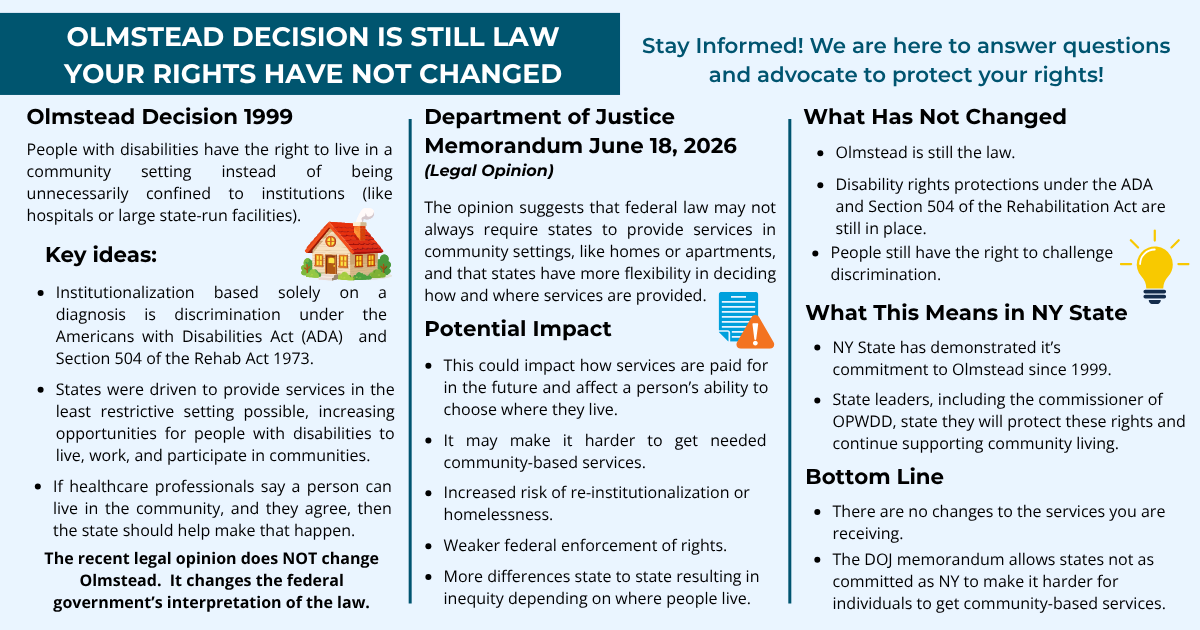
The U.S. Department of Justice recently issued a memorandum discussing the Americans with Disabilities Act (ADA), Section 504 of the Rehabilitation Act, and the 1999 Supreme Court case Olmstead v. L.C. The memo has raised questions about what it could mean for people with intellectual and developmental disabilities and their families.
What Is the Olmstead Decision?
In 1999, the U.S. Supreme Court decided a case called Olmstead v. L.C. The Court said that people with disabilities have the right to receive services in community settings when appropriate, rather than being unnecessarily separated from others in institutions or segregated settings.
For many years, the Olmstead decision has helped support opportunities for people with disabilities to:
- Live in homes in their communities
- Work and volunteer alongside other community members
- Build relationships and friendships
- Participate in everyday community life
- Make choices about where and how they live and receive services
What Did the DOJ Memo Say?
The DOJ memorandum suggests a narrower interpretation of the Olmstead decision. It states that federal disability laws may only require protection against unjustified institutionalization, rather than broadly requiring states to promote community integration in all situations.
In simple terms, the memo argues that the law may not require states to do as much as previously believed to expand community-based services and supports.
Should People Be Concerned?
Many disability advocates, service providers, and care coordination organizations are concerned that a narrower interpretation could affect future disability policies and services.
Their concerns include:
- Fewer expectations for states to develop community-based services
- Differences in available services from one state to another
- Reduced focus on helping people live fully integrated lives in their communities
- Increased challenges accessing housing, supports, and community opportunities
However, the memorandum does not immediately change services people currently receive. It is a legal opinion, not a direct change to programs or benefits.
Why Community Options Matter
Having a choice is important. Real choice means that people have access to meaningful options.
For many people with IDD, living successfully in the community requires:
- Affordable and accessible housing
- Reliable support staff
- Transportation
- Health and behavioral health services
- Employment and day opportunities
- Family and community connections
When these supports are available, people can make informed choices about where and how they want to live.
What Is New York State Saying?
The New York State Office for People with Developmental Disabilities (OPWDD) has reaffirmed its commitment to community integration and inclusion. OPWDD Commissioner Willow Baer has stated that “Community integration is not a privilege or based on convenience; it is a civil right that New York will continue to fiercely protect” and that New York remains committed to helping people with disabilities live, work, and participate fully in their communities.
This means New York continues to support opportunities for people with disabilities to:
- Live in their communities
- Receive community-based services
- Participate in work, recreation, and social activities
- Exercise choice and independence in their lives
What Does This Mean for You and Your Family?
At this time:
- People continue to have rights under the ADA and other disability laws.
- Community-based services remain available.
- Person-centered planning remains the foundation of service planning.
- New York State continues to support community inclusion and integration.
Families and individuals should continue working with their Care Manager, Care Coordination Organization, and service providers to pursue the goals, supports, and living arrangements that best meet their needs.
Our Commitment
We believe that people with intellectual and developmental disabilities deserve:
- Dignity and respect
- Meaningful choices
- Opportunities to be part of their communities
- Supports that help them achieve their personal goals
- Safe, stable housing and services that promote independence and well-being
While legal discussions and policies may change over time, our commitment remains the same: supporting people to live the lives they choose, in the communities they call home.
Questions?
If you have questions about how this issue may affect you or a family member, please contact your Care Manager or Care Coordination Organization for additional information and support.